

Don't Go Back in the Woods: Real Bigfoot Encounters While Camping
Summer should mean s'mores, stargazing, and sleeping under the stars. Unless you're one of the unlucky campers in today's episode — because for them, the woods had other plans.
We're fully leaning into summer with something that will make you reconsider that camping trip you've been planning. We've already introduced you to Skunk Ape, Florida's own pungent cryptid. But now we're going bigger. We're talking about the most famous resident of the deep woods, Bigfoot, aka Sasquatch, and three real-life encounters from ordinary people who went camping and came back with their understanding of the world completely rearranged.
Who Is Bigfoot, Exactly?
Bigfoot, also known as Sasquatch, a name rooted in the Halkomelem word "Sásq'ets", has been part of Indigenous Pacific Northwest tradition for centuries. Across decades of encounters and nearly every culture on earth, the descriptions are remarkably consistent. A seven to nine feet tall bipedal creature with dark hair and massive shoulders. A face somewhere between human and ape. Footprints between fourteen and twenty-two inches long. A creature estimated to weigh between four and eight hundred pounds that somehow moves through dense forest without making a sound… until it wants you to know it's there.
Most Bigfoot encounters follow the same pattern. First, an eerie silence, then that creeping feeling of being watched, then the wood knocking begins. The knocking is a deliberate rhythmic banging against tree trunks that researchers believe may be communication. Then the whoops and howls, sounds that don't match any known animal. Then heavy footsteps. Then the smell - a lovely scent that combines wet animal, rotting garbage, and sulfur all at once. And if you're still there after all of that... you might actually see a Bigfoot.
Six Witnesses on the Clarion River, Pennsylvania, Summer 2016
A lot of people picture Bigfoot in the rainy Pacific Northwest. But Pennsylvania? Pennsylvania actually has the third highest concentration of documented Bigfoot reports in the entire country. Its forests are dense, ancient, and threaded with rivers that go places humans almost never do.
In the summer of 2016, six separate people along a half-mile stretch of the Clarion River in the Allegheny National Forest, all reported the same thing. A large, dark, hairy figure, about seven feet tall, standing upright on the far bank just watching. Researcher Amy, co-founder of Project Zoobook, a group made up of actual primatologists, zoologists, and anthropologists, interviewed all six witnesses and said they were unanimous: they were close enough to know this was not a person in a costume.
And one more fun fact about Pennsylvania. In 2024, the small borough of Derry (about fifteen minutes from Andi's hometown in western Pennsylvania) officially declared itself a Bigfoot Sanctuary, recognizing sightings that stretch from modern times all the way back to when the Iroquois lived there. Willful harm or capture of the Bigfoot species is now punishable by law. No, really.
A Photojournalist Alone on Vancouver Island, Summer 2014
Sander Jain is an experienced outdoorsman. Clayoquot Sound is one of the most untouched places in North America, and Sander called it one of the most mystical places he'd ever visited. The first few days were perfect.
Then one evening, everything changed. He heard what sounded like boulders being thrown in the distance. Strange, almost owl-like calls started. One would sound, and then several responses would echo back from different parts of the forest. He went inside, tried to sleep, and then startled awake with his adrenaline maxed out. Something was right outside the cabin. Heavy, deliberate footsteps that literally shook the structure. Loud grunts and vocalizations unlike anything he'd ever heard. Researchers say this behavior, the deliberate stomping, the close proximity, is consistent with territorial assertion. Almost like saying, “I know you’re in there.”
Eventually, he heard two bipedal creatures run off quickly. Sander spent hours completely still with his hands over his ears, and sent seventeen emergency texts on his satellite phone requesting seaplane pickup. When the pilot arrived, Sander was too embarrassed to explain what had actually happened. He said something about rocks and a possible landslide. The pilot's response? "Hmm, sounds like Sasquatch to me. I hear stories from people up around here who see them turning over boulders on the shoreline." Later, a friend told Sander there's a reason the First Nations call that place Home of the Sasquatch.
The Night That Named Ape Canyon, Mount St. Helens, July 1924
This is the one that started it all — and it happened one hundred years ago.
Five gold miners: Fred Beck, Marion Smith, Leroy Smith, Gabe Lefever, and John Peterson, were deep in the forest near the southeast side of Mount St. Helens. They'd built a cabin by hand as they worked to find gold.
The miners started noticing things. Nightly whistling from multiple directions. Thumping sounds. Fourteen-inch footprints sunk deep in the mud. Then one morning, Fred Beck spotted a seven foot tall creature covered in dark fur standing at the edge of the canyon. He made the decision to fire his rifle at it. Big mistake.
That night, they were woken by a massive impact against the cabin wall. Three large Bigfoot surrounded the structure. They stomped, they threw rocks. One even got on the roof and started jumping, while another rammed the door. And then, here's the detail that's impossible to forget, one reached a huge, hairy arm through a gap in the logs and grabbed for an axe one of the miners had left against the wall. Like it knew what an axe was. Like it had been watching long enough to learn. A miner shot at the arm and it withdrew.
The attack lasted five hours, until sunrise. The miners fled, abandoning their gold claim. The story ran in newspapers across Washington and Oregon. None of the five men ever changed or retracted their accounts.
In 2013, nearly ninety years later, researcher Marc Myrsell located the actual cabin site using Beck's account and historical maps. He found spent rifle cartridges exactly where Beck said they'd fired from.
Shortly after the original incident, a Klallam tribe member and editor named J.W.G. Totsgi responded in The Oregonian. The creatures the miners described, he wrote, weren't apes. They were the Seeahtik — a legendary race of wild, hairy, intelligent giants from Indigenous tradition, described as seven to eight feet tall and territorial. Indigenous peoples had a name for these beings long before five miners stumbled into that canyon and started shooting.
So... Is Bigfoot Real?
We honestly don't know. But here's what we keep coming back to: the consistency.
These stories exist across time, across geography, and across cultures. Indigenous traditions in North America, the Himalayas, Australia, Siberia, every corner of the world that has deep wilderness, has some version of this story. A large, bipedal, hairy, intelligent being that lives just outside human territory. If this were just people making things up in the dark, you'd expect the details to be wildly different. They're not.
As for why no one has found a body — even large animals rarely turn up dead in the wild. Scavengers, decomposition, and sheer wilderness take care of things fast. And there are forests so dense and unmapped that "we would have found it by now" isn't quite the argument people think it is. Dr. Jeffrey Meldrum, a professor at Idaho State University, has built a legitimate academic career around the physical evidence. His team regularly finds results that can't be easily explained.
So if you're headed out camping this summer, maybe consider a campground. One with lights, and other people, and ideally walls. Because when you choose to sleep outside in the dark, you're choosing to be vulnerable in someone else's space. And that someone might be seven to eight feet tall and very, very interested in your axe.
Learn more about Project Zoobook here.
Read Sander Jain’s encounter with Sasquatch in his own words in Paddling Magazine.
Want to hear recorded audio of Bigfoot vocalizations? Check out these recordings from woodape.org.
If you’re interested in learning more about Florida’s Sasquatch cousin, the Skunk Ape, check out our full episode on the Skunk Ape.
Check us out on YouTube! Don’t forget to subscribe to our channel!
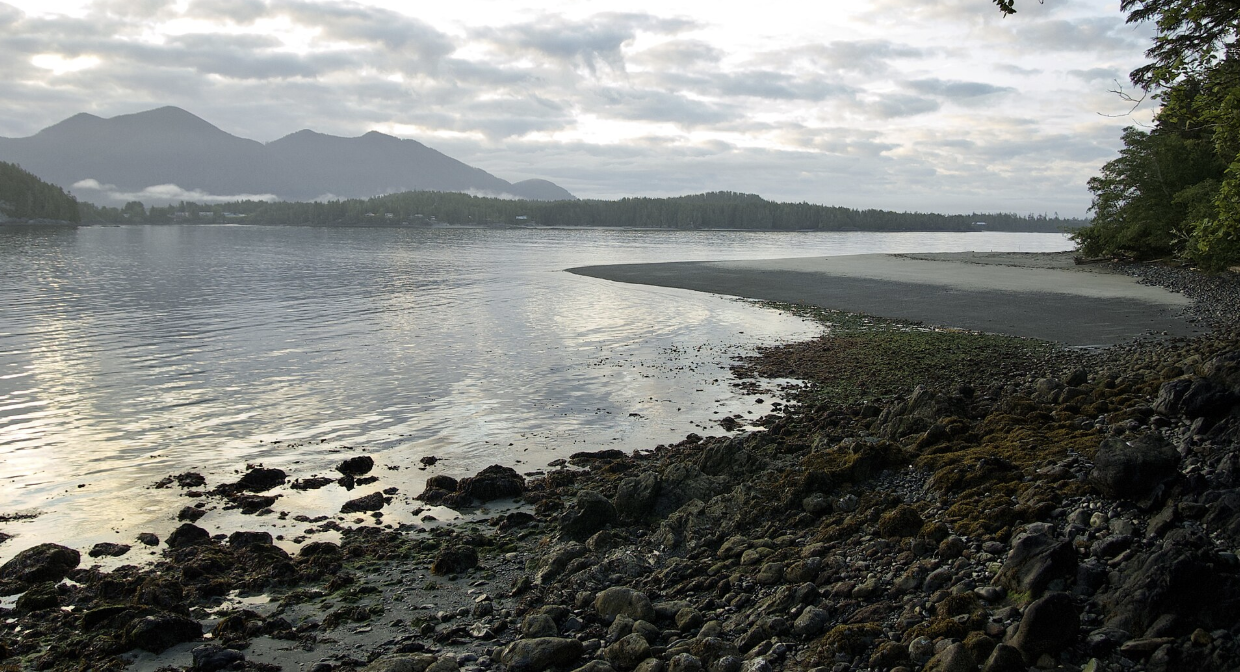
Clayoquot Sound, Vancouver Island — one of the most untouched stretches of wilderness in North America, and according to First Nations tradition, home to the Sasquatch.
