

Lily Dale, New York: The Town Where People Go to Hear From the Dead
Almost anyone who has lost someone they love has probably had the same thought at one point. If you could have just one more conversation, what would you say? Would you ask the question you forgot to ask? Would you finally say the words you never got the chance to say? Whether or not communication with the dead is actually possible, the hope behind that question is something almost everyone understands. For nearly 150 years, it has drawn people to one small community in western New York called Lily Dale, where thousands of visitors arrive every summer believing they just might hear from someone they've lost.
Lily Dale isn't famous because people think it's haunted. There are no ghost tours winding through dark streets, no stories of violent spirits trapped between worlds, and no famous haunted house sitting at the edge of town. Instead, Lily Dale has become the most well-known Spiritualist community in the United States because generation after generation has traveled there with a very different purpose. They come hoping to reconnect with parents, spouses, children, siblings, and friends who have passed away. Some leave believing they experienced something extraordinary. Others walk away convinced psychology and coincidence explain everything they saw. Almost everyone leaves with more questions than they arrived with.
The story of Lily Dale really begins more than thirty years before the town itself existed. In 1848, two young sisters named Maggie and Kate Fox claimed they were communicating with a spirit through mysterious knocking sounds inside their family's farmhouse in Hydesville, New York. Their older sister, Leah, quickly recognized that people were fascinated by the story and began organizing public demonstrations. Those demonstrations grew into séances, and before long the sisters had become national celebrities. Their claims helped launch what became known as the Spiritualist movement, a belief that the living could communicate with those who had died.
It's easy to understand why those ideas spread so quickly. The second half of the nineteenth century was marked by disease, high infant mortality, and eventually the Civil War. Nearly every family knew grief. Spiritualism offered something many people desperately wanted to believe—that death wasn't necessarily the end of a relationship. Physicians, professors, lawyers, journalists, and ordinary families all attended séances, hoping to see convincing evidence that consciousness survived after the body died. Whether they found that evidence is still debated today, but the movement grew rapidly enough that communities began organizing annual summer gatherings where believers could meet, attend lectures, and watch demonstrations by mediums.
One of those camp meetings was established along the shores of Cassadaga Lake in western New York in 1879. Families pitched tents beneath the trees, attended lectures about life after death, listened to mediums, and spent their summers surrounded by people who shared the same beliefs. Over time, some families decided they didn't want to leave when the season ended. The tents gradually gave way to cottages, dirt paths became streets, and a temporary campground slowly transformed into the town now known as Lily Dale.
Today, Lily Dale is still remarkably small, with only a few hundred year-round residents, but every summer thousands of visitors pass through its gates. The first thing many people notice is how ordinary it feels. The streets are quiet and shaded by enormous trees. Charming Victorian cottages sit close together, neighbors wave from their front porches, and visitors stroll through town carrying coffee cups as if they've wandered into any peaceful little village in upstate New York. It isn't until you begin noticing the signs outside the cottages that you realize this is unlike anywhere else.
One home advertises private mediumship readings. Another lists healing sessions. A community bulletin board announces the afternoon's public message service. People standing nearby casually talk about hoping a father or grandmother comes through during a reading later that day. The conversations feel completely normal because, in Lily Dale, they are. Almost everyone there has arrived carrying the same quiet hope that maybe, somehow, the people they've loved aren't really gone.
If there's one place that captures the heart of Lily Dale, it's Inspiration Stump. Hidden within the peaceful Leolyn Woods, the clearing hardly feels spooky at all. Towering trees create a natural canopy overhead while rows of simple wooden benches face what remains of an enormous oak tree that once stood there. Long after the tree itself died, the stump remained, and Spiritualist speakers simply continued using it as a platform. More than a century later, mediums still stand on that same stump nearly every day during the summer season to deliver what they believe are messages from the spirit world.
The experience is probably different from what most people imagine. There are no candlelit rooms, floating tables, or dramatic theatrical performances. Everything happens in broad daylight beneath the trees. A medium steps onto the stump and begins describing someone they believe is trying to communicate. Maybe it's an older gentleman who loved fishing and keeps mentioning a tackle box. Maybe it's someone whose family still argues about the clock sitting on the mantel. Sometimes no one responds. Then, after another detail or two, someone quietly raises a hand from the audience. The medium continues, sharing more memories, inside jokes, or family stories that seem impossibly specific.
To skeptics, demonstrations like these often look like examples of cold reading, a technique that relies on careful observation, educated guesses, and broad statements that listeners naturally personalize. It's a criticism Lily Dale has heard for generations, and one the community doesn't simply dismiss. Even many Spiritualists acknowledge that fraud has existed within the movement since its earliest days. The Lily Dale Assembly doesn't claim every medium is genuine or every reading is accurate. Instead, they maintain that authentic communication is possible, even if not every attempt succeeds. According to the Assembly, mediums who practice there are tested and vetted before being approved to offer readings, an effort to separate serious practitioners from those simply looking to exploit grieving families.
The stories visitors remember rarely involve dramatic predictions or sweeping revelations. Instead, they're often built around tiny details that seem almost impossible for a stranger to know. A forgotten family nickname. An inside joke no one else would understand. A broken cookie jar remembered only by a handful of relatives. An old clock that everyone argued about after a father passed away. Those small moments are the stories people carry home with them because they're the hardest to explain away.
One of the most interesting parts of our own research came from Andi's firsthand experience visiting Lily Dale years ago. She described the town exactly the way so many visitors have over the decades: peaceful, welcoming, and unlike anywhere else she'd ever been. During a private reading, the medium described grandparents Andi had never met, mentioning details she herself didn't recognize until she called her parents afterward. One story involved a favorite plant her grandmother had grown outside the family home, something Andi had never known but her father immediately confirmed. Another involved her grandfather teasing her for driving a Chevrolet because he had always been loyal to Ford. They're small details, but they're also the kind that continue fueling conversations about Lily Dale long after people return home.
Another stop for many visitors is the historic Maplewood Hotel, which has welcomed guests since 1880. Its wide front porch and rocking chairs make it look exactly like the sort of grand Victorian hotel you'd expect to find in a quiet resort town. Inside, however, hangs a sign that catches almost everyone's attention: No séances. No readings. No healings. It feels oddly specific, which naturally makes visitors wonder what stories led to that rule in the first place.
The Maplewood is also home to one of Lily Dale's strangest artifacts, a portrait known simply as Azur. Spiritualists believe it's a precipitated painting, meaning the image appeared during a séance in 1898 rather than being painted in the traditional sense. Skeptics have suggested more conventional explanations over the years, while believers point to eyewitness accounts describing the image gradually appearing on an otherwise blank canvas. Like so many things in Lily Dale, the painting asks visitors to decide for themselves what they believe.
Of course, no discussion of Lily Dale would be complete without mentioning the Fox Sisters themselves. Years after helping launch the Spiritualist movement, Maggie Fox publicly confessed that the mysterious knocking sounds had been produced by cracking her toe joints. The confession has long been cited as proof that Spiritualism began as a fraud. Yet even that story isn't entirely straightforward, as Maggie later recanted her confession, claiming she had been pressured into making it. Historians continue to debate what really happened, but one thing is undeniable: the movement they inspired didn't disappear. If anything, it grew.
Perhaps that's the most fascinating thing about Lily Dale. It has survived because it doesn't depend on everyone agreeing. Believers continue to find comfort there. Skeptics continue to visit hoping to understand what draws so many people back year after year. Paranormal investigators, historians, psychologists, and curious travelers all walk the same quiet streets, each looking at the town through a different lens. Some find evidence of genuine mediumship. Others find fascinating examples of human psychology. Many simply find a peaceful place where grief is treated with compassion rather than dismissal.
Whether communication with the dead is truly possible is something every visitor has to decide for themselves. But maybe that's never been the real reason Lily Dale has endured. People don't travel there because they expect absolute proof. They travel there because hope is powerful, and the desire for one more conversation is almost universal. Even if the answers remain just out of reach, that hope continues bringing people back to this remarkable little town, just as it has for nearly a century and a half.
If you'd like to hear the full story, including Andi's personal experience in Lily Dale and our discussion about the evidence both for and against mediumship, listen to our latest episode of You Two Scare Me wherever you get your podcasts. And if you've ever had an experience that made you wonder whether our loved ones are still with us, we'd love to hear your story.
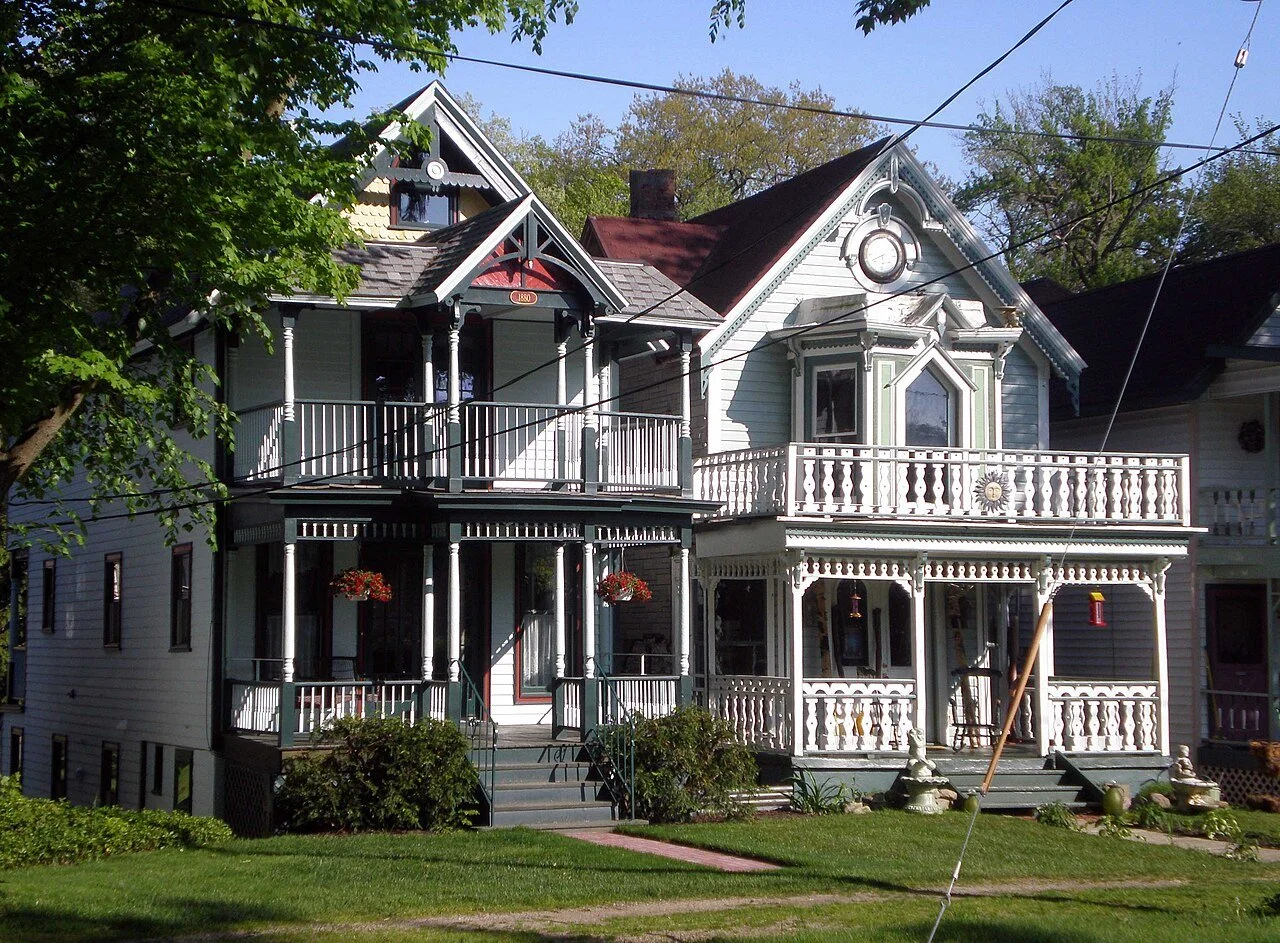
The quiet streets of Lily Dale are lined with beautifully preserved Victorian cottages, many of which serve as homes or offices for registered mediums offering private readings during the summer season.
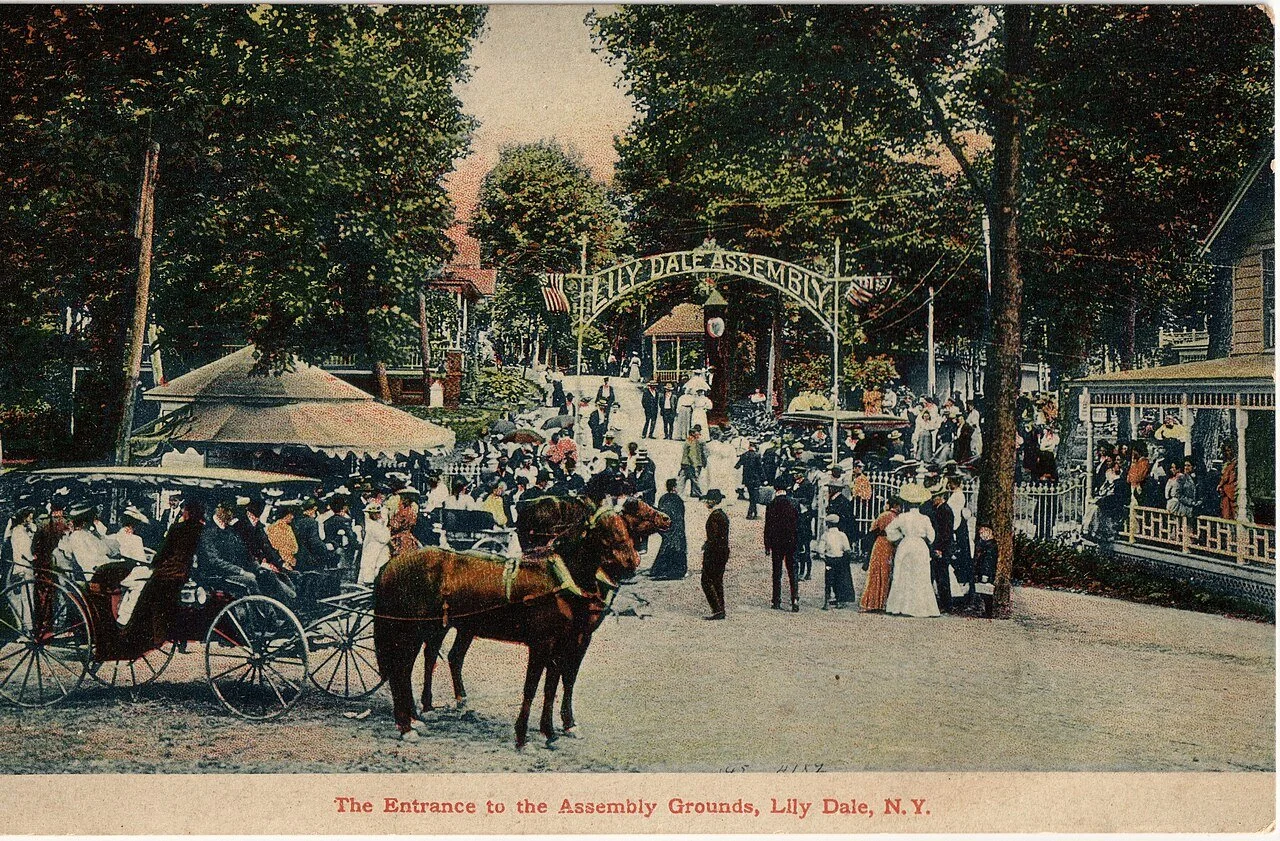
A vintage postcard captures visitors arriving at the entrance to the Lily Dale Assembly in the early 1900s, when horse-drawn carriages and summer camp meetings helped establish the town as the heart of the Spiritualist movement.
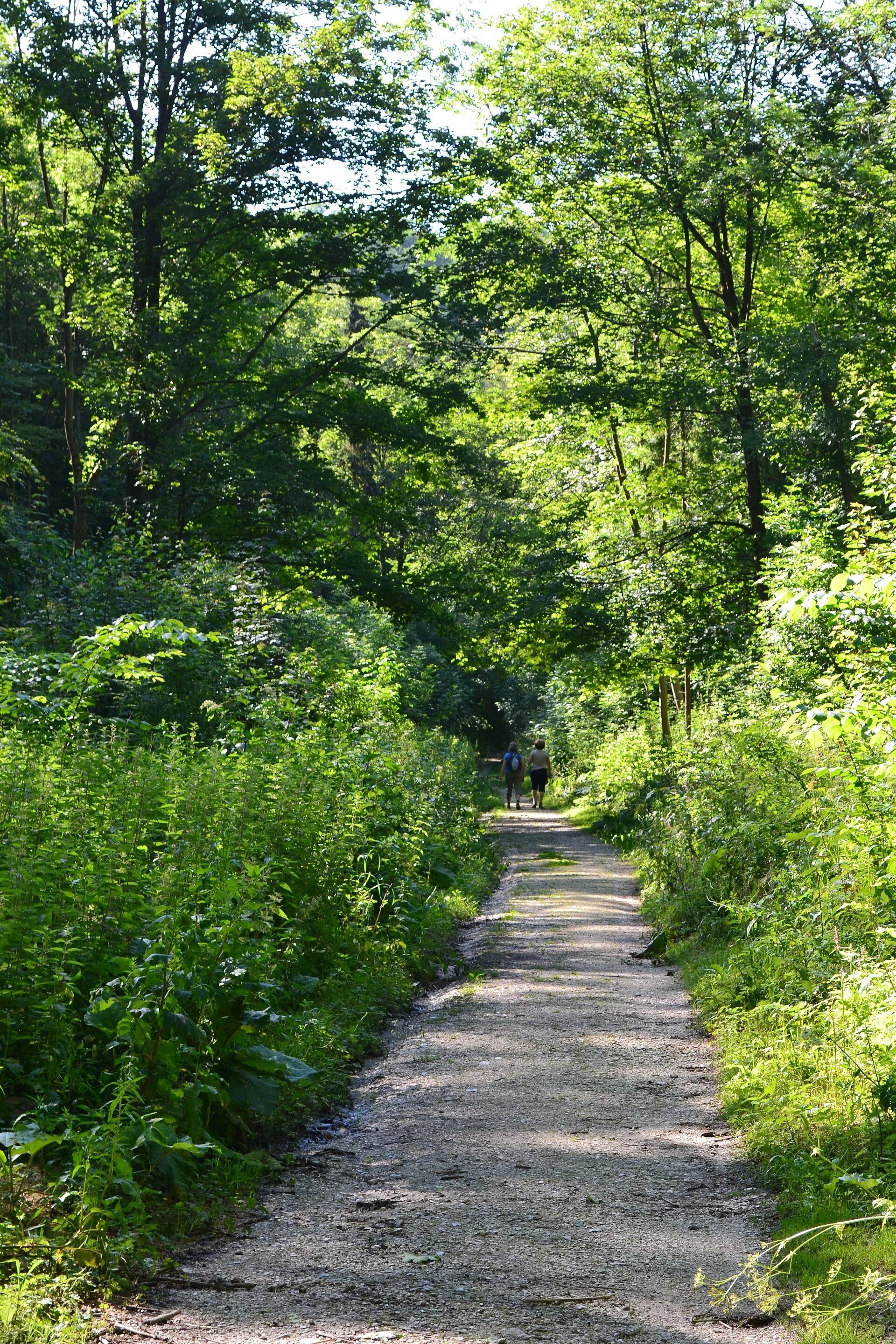
A peaceful walking path through Leolyn Woods leads visitors to Inspiration Stump, where mediums have gathered for generations to deliver public messages they believe come from the spirit world.
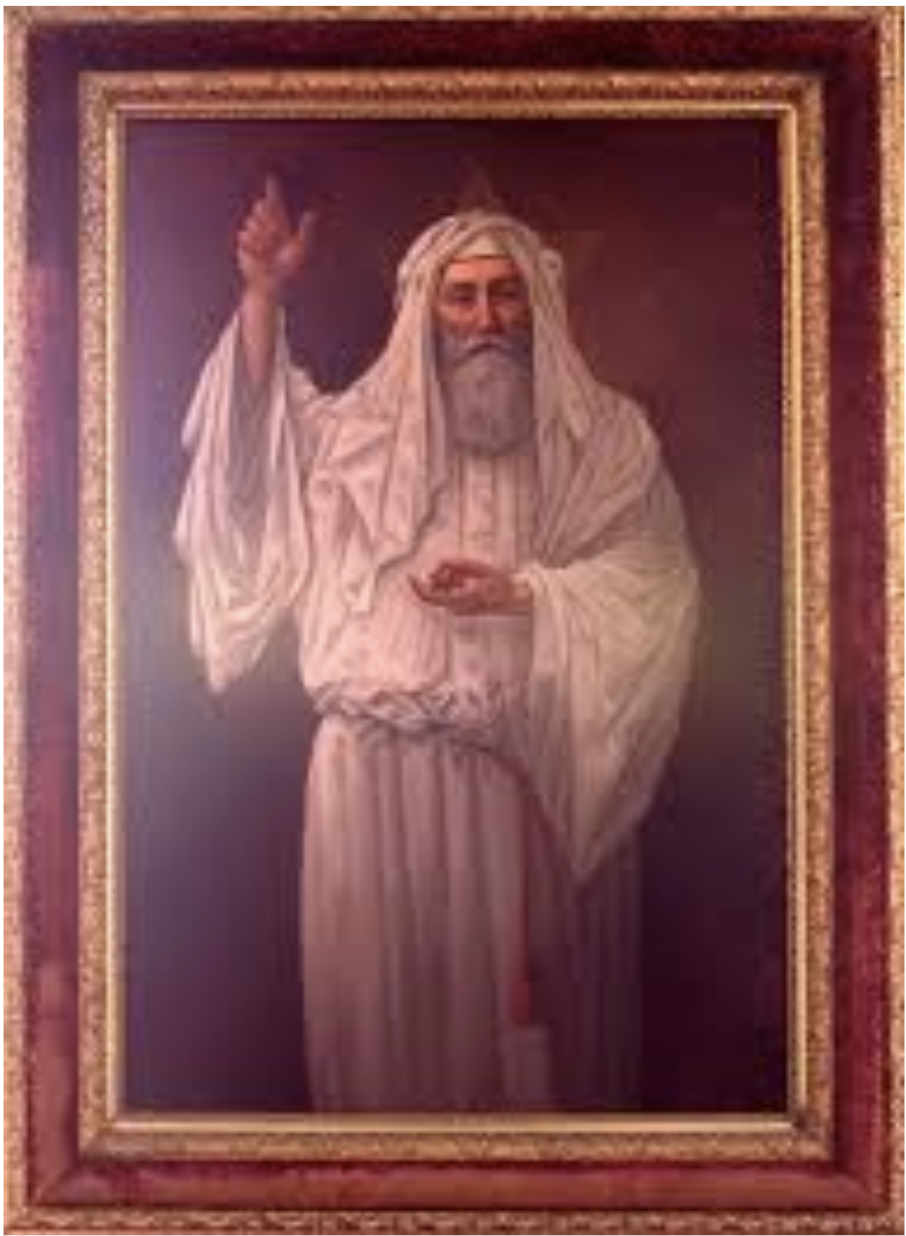
The mysterious Azur painting hangs inside the Maplewood Hotel at Lily Dale. Spiritualists believe the portrait was "precipitated" during a séance in 1898, while skeptics argue it was created by more conventional means.
